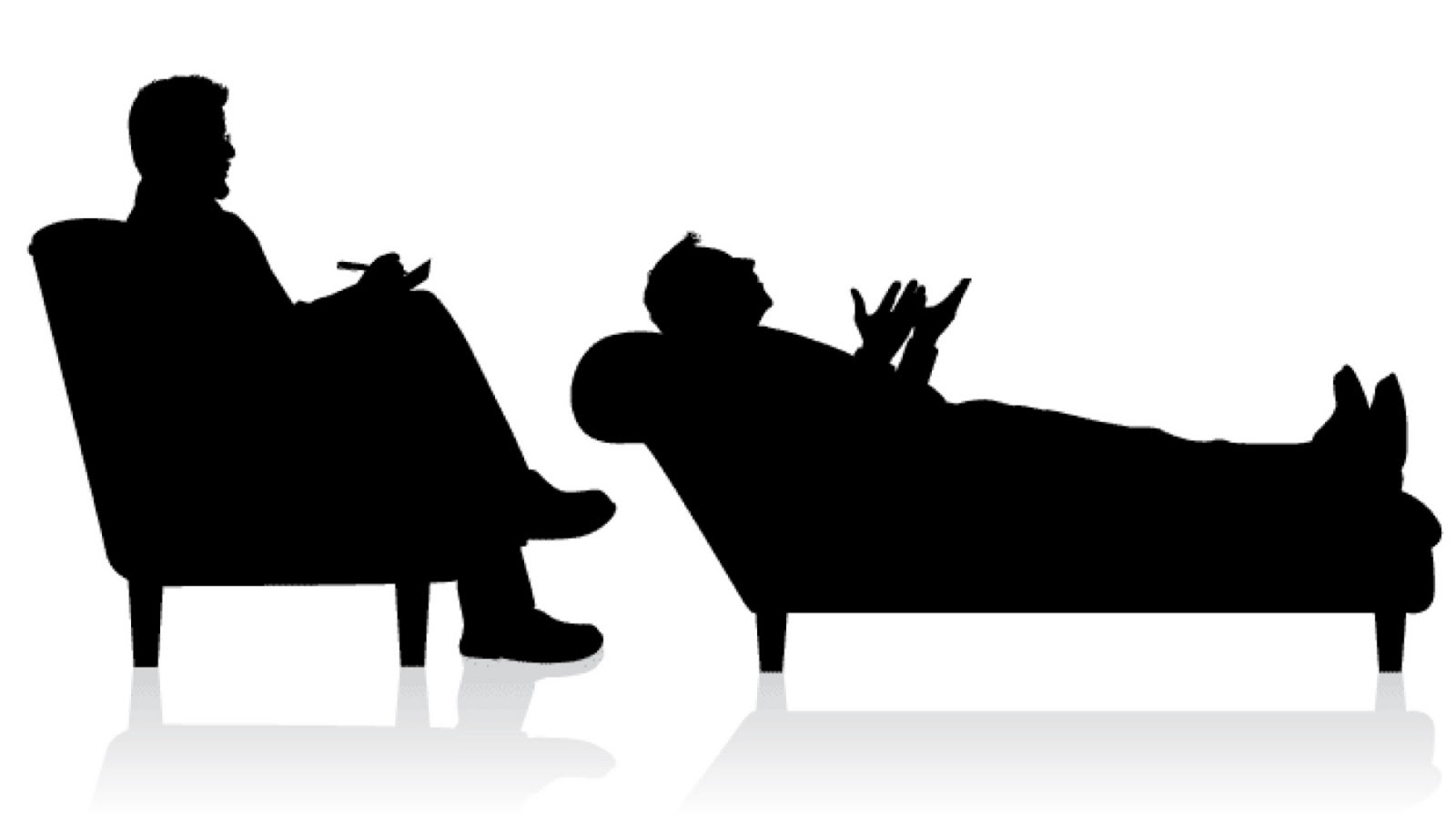
As I enter the second year of my counseling education program, my friends and family members still struggle to understand what exactly I will be doing in my future career as a counselor. People often ask me to diagnose them, to start a counseling session on the spot as if I was some kind of circus performer, and even to prescribe them medication. It seems that, although people are becoming more aware of mental health problems, many still do not understand what goes on during a session of counseling. I think that this lack of understanding about the mechanics counseling has led the general public to fill in the blanks based on how counseling is portrayed in pop culture. Since many have no experience, their only knowledge of counseling comes from film and television.
I feel conflicted whenever I see counselors portrayed on screen. A part of me is happy that more people are being exposed to counseling. However, another part of me is frustrated at how often therapists are portrayed as judgmental, pretentious, and unprofessional. My concern is that pop culture is turning people away from getting the help they may need. Opening up to a stranger is a difficult task for many people. If clients have a negative perception of counselors before they even begin therapy, the therapeutic relationship is hindered from the start.

Is the portrayal of counseling on-screen harmful? Can we change how counseling is portrayed in pop culture? Is there a way to educate the general public about what a counselor does? I don’t think that there’s any single answer to this problem.
I have a hypothesis as to why counseling is portrayed so inaccurately in pop culture. In the age of social media and smartphones, we’re addicted to instant gratification. Therapy however can be a long and difficult process involving introspection. I get the feeling that most people don’t want to look deep inside themselves for answers; they want someone else to tell them how to fix their problems. I think this translates to counselors in film and television magically solving all their client’s problems in a few moments. People don’t want to watch hours of rapport building, introspection, and coping skills training. People want to see highlights, the big revelations, and dramatic moments. The reality is much more boring than what we see on screen. As for why counselors are often portrayed as silly and incompetent, I think this is due to the stigma around mental health. People don’t want to talk about their own mental health, due to feeling like they will be seen as abnormal or as outcasts from society (Corrigan, Druss, & Perlick, 2014). In response, media presents counselors as silly and undeserving of respect, thus reinforcing mental health as taboo and as a “lesser” part of one’s health.
The peer reviewed study, “University Students’ Perceptions about Psychological Help Seeking: A Qualitative Study”, sheds light on some of the most common negative perceptions of counseling. Many believe that counseling is ineffective because it only offers “listening and talking” as a way to solve one’s problems. Students seem to be unaware of the many techniques that counselors employ, and underestimate the power of listening and talking as a method of solving problems. Another perception students have is that counseling services rely on prescribing medications that clients then become addicted to (Yelpaze & Ceyhan, 2019). I believe this shows how few people are aware of the distinction between counselors, who do not prescribe medication, and psychiatrists, who primarily focus on medication and medication management. Finally, another negative perception of counseling was that many counselors are not enthusiastic or sincere about helping others, and are only doing their job for the money (Yelpaze & Ceyhan, 2019). This sentiment that counselors are “only in it for the money” is reflected in other studies as well (Avent, Cashell, & Brown-Jeffy, 2015). Personally, I think if the individuals in this study knew how much the average salary for a counselor is and the amount of stress we are subjected to, they would not think we are in this profession for the money.
/cdn.vox-cdn.com/uploads/chorus_image/image/44173080/sopranos.0.0.jpg)
Am I expecting too much from pop culture in how counseling is represented? I’m going to school for two and half years, followed by two years of supervision in order to be a competent mental health counselor. Do I really expect Hollywood screenwriters to have that minimum amount of experience in counseling theory before they write a scene? No, that would be unreasonable. That would be like expecting a medical drama like Grey’s Anatomy to show me a several hours long reenactment of open-heart surgery. I personally wouldn’t want to watch that or find it entertaining. I also realize that I am not the average audience. On the other hand, show me the solemn hero, Jon Snow, from HBO’s Game of Thrones sitting down for an hour of counseling. I’ll make the popcorn and you’ll have my complete, unwavering attention. Would the average viewer want to watch that? Probably not.
As a counselor in training, all I want is for counselors to be portrayed respectfully and more professionally. I realize that “professional” can mean different things to different people. So, for any writers who are looking to better portray counselors on screen, I simply recommend that they review the American Counseling Association’s (ACA) Code of Ethics. These codes ensure that all counselors are held to the same standards of ethics in the counseling profession. I think that by referring to these, writers can easily check whether or not a counselor would do certain things. I want writers to understand that disobeying these codes would lead to a counselor losing their license, or more importantly risk harming their clients. Other good sources for information on counseling and mental health include websites for the ACA, the American Psychological Association (APA), and Good Therapy. Depending on the topic, writers can research treatment methods for different problems and get insight into the counseling process.
Negative Portrayals of Counseling in Film and Television
Finally, I want to point out some of the worst counseling offenses I have seen in movies and television. Some of these films and television programs show objectively unethical counselors who violate the ACA Code of Ethics, while others just portray unprofessional counselors that I personally would not want to work with.
Mad Men (2007-2015):
In the show Mad Men, which takes place in the 1960s, the character of Betty Draper sees a psychiatrist because she is suffering from tremors and is struggling with the recent death of her mother. In the 1960s, the style of therapy called psychoanalysis was popular, which involves the counselor taking on more of a passive, “listener” role. It was also common at this time for psychiatrists to practice counseling, versus just focusing on medication like they do today. Although not shown in this clip, the therapist later calls Betty Draper’s husband, Don, to reveal to him everything that Betty said in the session and additionally calls her “childlike”. My fears from this portrayal of counseling is that it might reinforce the idea that all counselors just sit and listen and offer no feedback to their clients. While listening is a significant part of psychoanalysis, there are hundreds of other therapeutic techniques, many of which involve the counselor taking on a more active, speaking role in sessions. There is also the fact that the psychiatrist later called Betty’s husband without her knowledge to reveal the details of her session. Confidentiality is one of the most important ethical standards that all counselors must follow. You can find more information on confidentiality in the ACA Code of Ethics, Section B: Confidentiality and Privacy, subsection A.7.b., which states that counselors must obtain consent prior to sharing the client’s information. There are cases where a counselor can share information on their clients, such as if the client signed a release of information to a specific person, or if the client was in danger of hurting themselves or someone else. However, this was not the case during this Mad Men episode.
The Prince of Tides (1991):
Another negative portrayal of counseling is in the 1991 romance film, “The Prince of Tides”. In the film, a psychiatrist played by Barbara Streisand is treating a girl who is suffering from amnesia caused by trauma. The girl is placed in the custody of her twin brother, played by Nick Nolte. Throughout the film, the psychiatrist treats the brother, becomes physically aggressive when he is uncooperative with treatment, falls in love with him, and eventually has sex him. Obviously, my problem with this portrayal of counseling is that is the lack of boundaries between the counselor and the client. A counselor, or anyone for that matter, should never physically assault another person. A counselor should also never engage in a relationship with a client and/or immediate family member of their client. This violates ACA Code of Ethics, Section A.5.: Prohibited Noncounseling Roles and Relationships, which states that counselors should avoid sexual/romantic relationships with their clients. A counselor should also avoid harming her clients, which is stated in the ACA code, section A.4.a. Avoiding Harm. I fear that those who watch this film may think that their counselor is someone they can have a romantic relationship with. I also fear clients might possibly avoid building any type of relationship with their therapist in the chance that their therapist might misread their actions and think they are flirting with them.
She’s Funny That Way (2014):
In this clip from the film, “She’s Funny That Way”, a counselor portrayed by Jennifer Aniston is having her first session with a client portray by Imogen Poots. In the 3 minute clip (which encompasses the entirety of the counseling session), the counselor shames the client for being a call girl, talks down to her, has her dog running in and out of the session, answers her phone during the session revealing identifying information about one of her other clients, uses ableist language to describe her client as a “loon”, and quickly wraps up the session before any real progress has been made, exclaiming “doesn’t therapy work like magic!?” Firstly, all these things I listed are unprofessional, and secondly there are ethical violations. The counselor appears to be imposing her own values when she expresses her distaste for the client’s profession, violating codes A.4.b. Personal Values and C.5. Nondiscrimination. Again, this counselor is breaking confidentiality, revealing information about another one of her clients. I fear that those who watch this scene will have the beliefs reinforced that counselors are unprofessional, judgmental, and sharing your information behind your back.
Positive Portrayals of Counseling in Film and Television
I believe that picking apart film and television for negative portrayals of counseling is much easier than it is to find good portrayals of counseling. I also think the line between professional and unprofessional can be subjective and difficult to discern. Due to this, I will link to different articles and blogs I have found where therapists have listed some of their favorite and most accurate portrayals of counseling.
- Counseling Today – Counseling goes to the movies
- Good Therapy – 5 Lies People Learn from the Media about Therapy
- 7 Fictional Films about Mental Health
- Therapy Is Not a Place for Romance
- We’re Not Psychologists but We Play Them on Television
- We Spoke to a Psychologist About Hollywood’s Depictions of Mental Illness
References
American Counseling Association (2014). ACA Code of Ethics. Alexandria, VA: Author
Avent, J. R., Cashwell, C. S. & Brown‐Jeffy, S. (2015). African-American pastors on mental health, coping, and help seeking. Counseling and Values, 60(1), 32-47.
Corrigan, P. W., Druss, B. G., & Perlick, D. A. (2014). The impact of mental illness stigma on seeking and participating in mental health care. Psychological Science in the Public Interest, 15(2), 37–70. https://doi.org/10.1177/1529100614531398
Yelpaze, I., & CEYHAN, A. A. (2019). University Students’ Perceptions about Psychological Help Seeking: A Qualitative Study. International Online Journal of Educational Sciences, 11(1), 123–139. https://doi.org/10.15345/iojes.2019.01.
 Misrepresented: Counselors in Film and Television